Digital Marketing Trends for 2026: What Every Business Must Know

As the digital marketing world continues to evolve at breakneck speed, marketers stand on the cusp of yet another transformational year.
Digital marketing in 2026 isn’t going to be about playing catch-up anymore. The game’s changed. Thanks to AI doing more thinking for us and consumers growing smarter (and frankly, a bit more suspicious), you’ve got to be not just quick on your feet, but a step ahead.
This year, success will belong to those who approach digital marketing not as a sprint but as a calculated game of chess. TU Marketing’s forecast reveals the trends, tools, and tactics set to redefine how brands engage consumers over the next 12 months.
From the rise of predictive personalisation and conversational search, to the resurgence of authentic storytelling and ethical data practices, the forces shaping 2026 require marketers to blend sophistication with empathy, a trend we’re personally a huge fan of.
Let’s explore the digital marketing trends poised to reshape connection and conversion in 2026, equipping brands to move beyond reaction and into genuine foresight.
Predictive Personalisation in Digital Marketing
The days of static customer segmentation are officially over.
In 2026, we enter the era of predictive personalisation: AI-driven systems that don’t just respond to user behaviour but anticipate it.
Advanced machine learning models now interpret intent signals far more accurately than before. Rather than analysing what a user has done, they model what a user is likely to do next. Retail giants like ASOS and Tesco have already begun testing “anticipatory commerce,” where predictive systems recommend or even pre-reserve products based on purchasing likelihood.
Marketers focus on first-party data collection and integrate predictive analytics across all touchpoints. This calls for investment in customer data platforms that unify and segment audiences with precision.
Those who succeed will create hyper-relevant experiences that feel personal, almost psychic, and decidedly human (all while being AI driven).
Search Evolves: From Keywords to Conversations
Online search, the bedrock of digital visibility, continues its transformation.
In 2026, traditional keyword optimisation gives way to “conversational SEO.” Voice interfaces now account for nearly half of all daily searches, thanks to the widespread adoption of wearable and in-home AI devices.
To capture this new kind of searcher, brands must learn to write the way people speak. TU Marketing’s SEO services help brands adapt to this shift, including strategies for zero-click optimisation and local SEO, critical for reaching nearby customers.
We predict that content optimised for questions, tone, and natural phrasing, rather than rigid phrases, will rise through the rankings.
At the same time, generative search engines such as Google’s SGE and Microsoft’s Copilot Search are blending AI summaries with traditional links. For brands, this creates a paradox: visibility without clicks. TU Marketing anticipates a renewed focus on “zero-click optimisation,” ensuring brand authority appears within AI-generated snippets, even when users don’t land on a website.
Brands that want to thrive can’t just rely on isolated tactics, they need to become brands people genuinely love and trust. This happens by being helpful, generous, offering superior products and growing their influence naturally through authentic connections.
This is particularly vital for those targeting local customers, as explained in our comprehensive guide on Local SEO in an AI-first World.
Authenticity and the Surprise Return of Human Storytelling
After years dominated by automation, 2026 marks a renaissance of human creativity.
The public appetite for authenticity has risen on social media and online. AI tools can write a press release in seconds, but they cannot yet replicate human vulnerability, humour, or cultural wit.
Brands are reacting by reintroducing “human touch” into their communications. TU Marketing’s trend data shows that campaigns featuring real employees, founders, or communities receive significantly higher engagement rates than those built purely with polished AI or stock assets.
This new wave of storytelling is emotionally intelligent, candid and self-aware. A posting by a small café owner describing a disastrous morning opening may outperform a multi-million-pound brand campaign if it feels more honest.
Authenticity now equals authority, and we love to see it.
Enhancing social presence with social media management can boost this authenticity, fostering trust and customer loyalty.
Data Ethics and the Return of Trust Marketing
2024 and 2025 were marked by privacy regulation upheavals, the EU’s Digital Services Act, updated GDPR clauses, and the expansion of the UK’s Data Reform Bill.
As a result, 2026 will force marketers to look at an old concept through a new lens: trust.
Consumers have grown weary of shady or unclear data collection. They now demand to know how their digital footprints are stored, shared, and monetised.
Marketers that build open, ethical data ecosystems, where consent and transparency are core values, will enjoy longer-term customer loyalty.
This year’s major shift we foresee? The rise of “Trust Marketing.”
Leading brands are adopting public ethics dashboards, showing customers exactly how their personal data fuels personalisation engines. It’s marketing as a moral contract.
We predict this transparency-driven approach will define brand reputation across industries. In short, trust will become a conversion channel in its own right.
The Growing Power of Micro-Communities
Mass targeting is waning. The most successful campaigns in 2026 will focus on micro-communities: focused groups of passionate consumers bound by shared values or niche interests. As the great Seth Godin says: smallest viable market.
Instead of fighting for virality, brands are learning to cultivate loyalty in tighter circles. Whether it’s a Discord channel for fintech enthusiasts or a private fitness WhatsApp group, these spaces are intimate, participatory and self-sustaining. This is driven, in part, by the meteoric rise of the coaching industry in recent years. So if you’re a niche coach – you’re primed for success in 2026.
Influencer marketing will continue to evolve here as well. Macro-influencers lose ground to smaller, more credible individuals whose endorsement carries deeper cultural weight. TU Marketing recommends brands develop ambassador programmes focusing on these micro-voices: advocates, not advertisers.
The key lies in nurturing conversation and connection over conversion. By offering community members early access, genuine interaction, and personalised recognition, brands seed a cycle of advocacy that extends far beyond a single campaign.
TU Marketing explores how customer reviews impact credibility and growth, underlining that authentic engagement builds enduring influence far beyond paid tactics.
Video Marketing: The Era of Immersive Economies
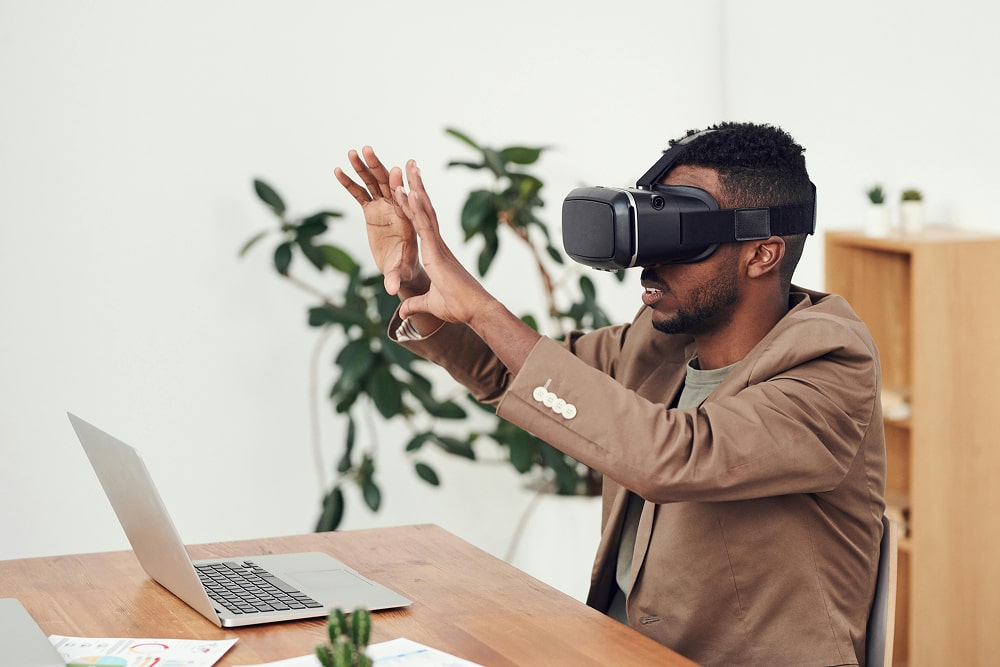
If 2025 was the year of short-form domination, 2026 brings depth back into video marketing. Long-form storytelling, particularly immersive, interactive formats, is coming back. With 5G fully integrated and AI-enabled browsers on the rise, brands can create narrative ecosystems across platforms.
Think: a YouTube video leading seamlessly into an augmented shopping experience on mobile. The boundaries between viewing, interacting, and buying are dissolving.
Livestream commerce, too, continues its ascent. Analysts forecast the UK’s livestream shopping sector will exceed £10 billion before the end of 2026. This form of engagement blends entertainment and transaction, making every broadcast a potential retail event.
For marketers, this means rethinking video as a layered experience, one that informs, entertains, and converts all at once.
AI as Co-Creator, Not Competitor
AI will not replace marketers in 2026; it will empower them. The romance between creativity and computation is now fully realised. Today’s AI tools can generate data-driven insights, predict successful campaign formats and even recommend emotional tones likely to resonate with specific audience behaviours.
Yet the most sophisticated brands see AI not as a replacement for human touch, but as a creative amplifier. Copywriters collaborate with AI to brainstorm headlines; designers use generative tools to conceptualise campaigns faster; strategists run simulations predicting audience reactions.
TU Marketing’s internal testing showed content teams using AI co-creation workflows saw productivity increase, while campaign performance improved thanks to more iteration and experimentation.
The dividing line isn’t man versus machine, it’s brands that master collaboration and connection over automation versus those that don’t.
For more on how AI will shape SEO strategies, see TU Marketing’s insights on How AI Overviews Impact SEO in 2025.
Sustainability Becomes a Priority In Marketing
Gone are the days when sustainability was a corporate afterthought. In 2026, environmental ethics are baked directly into digital operations themselves. Data centres, content delivery networks and ad servers all come under scrutiny for their energy footprints. This shift is largely driven by public awareness of the vast resources required by Large Language Models to perform their functions.
Consumers now ask not only what they buy but how brands communicate. High-resolution video campaigns, for instance, are criticised for their carbon load. Expect to see “eco-optimisation” audits becoming part of broader marketing strategy, assessing everything from content hosting emissions to AI usage efficiency.
Major brands are setting emissions targets for their martech stacks, much like they once did for logistics and product supply chains. TU Marketing expects environmental transparency reports to become a new SEO ranking factor before 2027, as search engines increasingly reward sustainable operations.
TU Marketing illustrates this evolving landscape in How Digital Marketing Changed the World!.
Commerce Meets Content: The Shoppable Universe
In 2026, content and commerce fully converge. Every social post, live event and video becomes a potential storefront.
The evolution of “shoppable media” means consumers can engage and purchase with a single gesture, whether while scrolling Instagram, watching an AR concert or chatting with a virtual AI brand concierge.
Retail platforms are increasingly integrative, transforming social ecosystems into direct sales funnels. AI-powered recommendation layers turn streamed content into personalised shopping experiences.
Marketers must now think omnichannel in the truest sense: merging storytelling, shopping, and social interaction into seamless flows. The winners will be those who remove friction through intelligent integration, converting attention into action in real time.
The Future of Metrics: Engagement Quality over Quantity
Clicks are cheap; commitment is priceless.
In 2026, digital measurement shifts decisively toward qualitative engagement. Marketers are moving beyond vanity metrics to smarter indicators such as “emotional resonance,” “conversation depth,” and “retention momentum.”. This echoes the importance TU Marketing has highlighted about building brand recognition as essential for SEO success, reinforcing that long-term visibility depends on trust and connection.
With cookies fading into obsolescence, first-party data reigns supreme. But it’s how that data is interpreted, through behavioural psychology and emotional analytics, that defines future marketing excellence.
Brands will increasingly rely on sentiment tracking and conversational analytics to refine communication. TU Marketing encourages clients to focus not on louder campaigns, but on longer-lasting impressions.
The most valuable engagement isn’t fast, it’s faithful.
Marketing’s Human Comeback In 2026
For all the talk of technology, 2026’s greatest transformation is ultimately human.
Digital marketing is returning to its roots: communication. Behind every pixel, data point, or predictive model stands a story, a mission and a person.
The brands that will master 2026 are those that blend empathy with efficiency, technology with tenderness. They’ll use machines to measure, but humans to move hearts.
TU Marketing stands ready for this renaissance. As we continue to help clients shape their digital futures, we know one truth endures: marketing, no matter how advanced, remains the art of connection.
Ready to lead your market with expert strategies? Contact TU Marketing to explore tailored PPC, SEO, social media, and digital marketing solutions designed to grow your influence naturally.