
Understanding Search Intent: The Key to Smarter SEO Strategy

The internet is noisy. Every brand, regardless of size, is elbowing for position on the world’s largest digital high street: Google. Yet, despite the arms race for visibility, only a handful of businesses manage to attract meaningful organic traffic. The difference is often understanding search intent.
At TU Marketing, we see search intent not as an abstract idea, but as the bedrock of an effective SEO and content strategy.
Join us as we dissect what search intent is, how it influences modern search behaviour and how marketers can harness it to create content that not only ranks but converts. If your business is serious about strategic growth, this is your essential guide.
What Is Search Intent?
At its simplest, search intent is the reason behind a user’s query. Why someone opens Google and types a phrase reveals far more than the words themselves. Whether they want to learn, compare, or buy, understanding that underlying motive is the difference between showing up and standing out.
When users type “how to improve SEO rankings,” they’re not looking for a sales pitch; they want knowledge. But when they search “SEO agency near me,” their intent shifts, they’re ready to act. Recognising these differences helps brands tailor not just their keywords, but their content and calls to action.
If you want to see how creating content fits into a broader strategy, check out our guide on
how to maximise your blog’s reach and drive Google traffic, which explains effective content distribution and SEO techniques
The Four Core Types of Search Intent
All search queries fall broadly into four categories. Understanding these can transform your keyword strategy by aligning content with where users are in their awareness and decision-making journey.
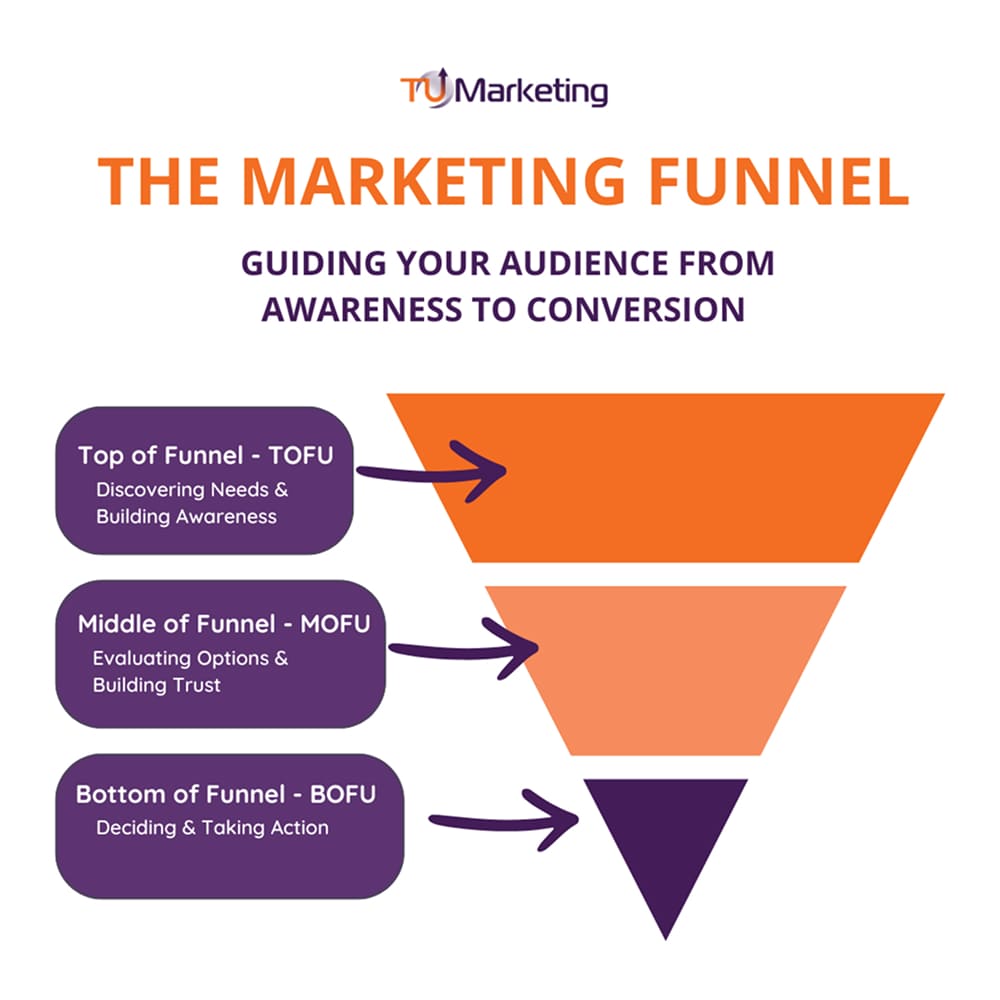
This journey is often mapped as stages of a marketing funnel:
- Awareness: Users are just discovering a need or problem and seek educational content.
- Consideration: Users evaluate options, comparing features and benefits.
- Decision: Users are ready to act and want clear, compelling reasons to convert.
By aligning your content with these stages through search intent, you ensure your messaging meets users at the right time, improving relevance and conversion potential.
1. Informational Intent
This intent corresponds to the Awareness or Top of the Funnel (TOFU) stage. Here, potential customers are just discovering they have a problem or interest and seek educational, insightful content.
Informational queries make up the majority of searches. These users want to learn something to find an answer, definition, or explanation. Think:
- “What is local SEO?”
- “Best time to post on Instagram”
- “How does Google algorithm work?”
For marketers, informational content builds authority. Detailed guides, blogs, and explainer videos are ideal. At TU Marketing, we find these assets perform exceptionally well for brand awareness and lead nurturing. Your goal here isn’t to sell, but to educate. Be helpful and generous with your insights.
Explore our blog on how to use content marketing to build brand awareness, which offers practical tips for attracting and educating your audience through content.
2. Navigational Intent
This often aligns with the Interest phase, sometimes overlapping with early Consideration. Users have brand awareness and want specific resources. Their intent is to find your branded content or services easily. They might type:
- “TU Marketing blog”
- “LinkedIn login”
- “HubSpot Academy courses”
While they might seem less strategic, navigational queries are critical for visibility. You need to ensure your website and brand assets are well optimised to appear prominently, even for your own name, because competitors often bid on them with paid ads.
This reflects brand recognition or desire to engage directly with known resources. Making sure key pages such as About Us and Services are highly visible and easy to access is essential to support this behaviour.
3. Transactional Intent
Here, the user is ready to act. This corresponds directly to the Decision or Bottom of the Funnel (BOFU) stage. Users want clear, actionable solutions and an easy path to conversion.
Transactional searches often include words like “buy,” “hire,” or “download.” They show commercial readiness. For example:
- “Hire SEO consultant London”
- “Buy marketing automation software”
- “Book PPC audit”
At this stage, trust and clarity are paramount. Conversion-focused pages with compelling calls-to-action and social proof are key. Include customer reviews, pricing transparency and case studies.
To capture this audience, service pages titled like our SEO Agency in Hertfordshire page are critical. It clearly outlines the results-driven, local SEO services we offer, helping convert interest into committed clients.
4. Commercial Investigation
This sits between informational and transactional intent. Users are actively comparing options, but not yet committed. This aligns with the Consideration or Middle of the Funnel (MOFU) phase. Users are evaluating different products or services, weighing benefits and costs before deciding. Typical queries include:
- “Best digital marketing agencies UK”
- “Ahrefs vs SEMrush comparison”
- “Top marketing trends 2025”
Content targeting commercial intent should nurture decision-making. Think comparison articles, buying guides, testimonials, and thought-leadership pieces.
Why Search Intent Matters
Search intent is king. Google’s algorithms have become increasingly sophisticated, placing intent above exact match keywords. In fact, the search engine now interprets semantic meaning and user context to deliver results most likely to satisfy intent.
If your content doesn’t match what the user is truly seeking, your rankings will suffer even if your keywords are on point. Conversely, when you align perfectly with user intent, you’re rewarded with higher click-through rates, longer on-page time and ultimately more conversions.
At TU Marketing, we analyse every keyword through the lens of intent before deciding on content type, heading structure, and optimisation priorities. That’s how we ensure the right content meets the right audience, at the right time.
How to Identify Search Intent
Getting search intent right begins with proper analysis. Here’s how professionals approach it:
1. Examine the SERP
Type your target keyword into Google. What do you see?
- Blog posts and how-tos indicate informational intent.
- Product pages or pricing results show transactional intent.
- Comparison lists reveal commercial investigation.
Google tells you what users expect; learn from the clues.
2. Analyse Keyword Modifiers
Words like “best,” “how,” “buy,” “near me,” or “review” are strong intent indicators. Build keyword groupings around these modifiers to structure your content strategy.
3. Use Analytics Tools
Leverage platforms such as SEMrush, Ahrefs, or Google Search Console to review click behaviour and CTR variance. Pages that attract traffic but low dwell time may not align with intent, signalling a need for refinement.
4. Observe User Journey Data
Understanding how visitors move through your site reveals where intent shifts. Do they start with blogs and end on service pages? That’s your conversion path in motion.
Within your content, use internal links that guide the user naturally along their journey, for example, linking from a blog post to an appropriate services page or specific SEO offering.

Crafting Content for Each Intent Type
Once you know what users want, it’s time to deliver. The art of SEO content creation lies in crafting suitable content formats for each intent.
Informational Content
Focus on long-form, research-backed articles and tutorials. Break down complex topics with subheadings, visuals, and examples. Aim for clarity, not jargon. Internal linking should guide visitors toward deeper learning, leading naturally into conversion-oriented content.
For example, our piece on how digital marketing has changed the world shows how educational content can engage audiences effectively.
Commercial Content
Offer balanced, evidence-based discussions. Include comparison tables and visual assets to aid decision-making.Highlight differentiators without resorting to hard selling. Genuine insight wins trust and trust wins business.
Transactional Content
Simplify the path to action. Use clean, focused messaging, call-to-action buttons, and unobtrusive design. Incorporate case studies, such as Client Success Stories, to provide validation just before a user converts or visit our SEO agency page for an example of such focused conversion content.
Navigational Content
Optimise your homepage, landing pages, and navigation architecture.
Ensure consistent meta descriptions and clear linking between About, Blog, and Contact TU Marketing pages. A frictionless experience reinforces brand trust and improves engagement.
SEO and the Evolving Role of Intent
As artificial intelligence continues to refine Google’s search results, intent-driven content will become even more essential. Search no longer revolves around keyword density; it centres on purpose and user satisfaction.
The integration of generative AI into search, such as Search Generative Experience (SGE), amplifies this further. SGE summarises intent-focused results, meaning your content must answer user needs concisely and authoritatively from the outset. Pages that provide value quickly, with strong headings, structured data, and direct takeaways will capture visibility.
TU Marketing has already begun adapting SEO strategies for this intent-first landscape, combining human creativity with machine insight.

Measuring Success: Intent-Based KPIs
Traditional metrics like rank and impressions only tell half the story. When optimising by intent, measure engagement against audience purpose.
For informational pages, focus on:
- Average time on page
- Number of internal link clicks
- Scroll depth
For transactional pages, monitor:
- Conversion rate
- Form submissions
- Cart completions or sign-ups
For commercial pages:
- Clicks on comparison links
- Downloads of buyer guides
- Repeat visits
Layer these analytics together for a holistic understanding of how users behave; and most importantly, whether your content is satisfying their intent.
Common Mistakes to Avoid
-
- Targeting all users with one content type – Don’t write a blog trying to educate and sell simultaneously; it confuses algorithms and readers alike.
- Ignoring SERP clues – Google reveals what works; always validate your assumptions against current results.
- Neglecting internal linking – Failing to guide users through your content journey wastes valuable opportunities for engagement.
- Keyword stuffing – Matching intent is about empathy, not excess. Write for people, optimise for search.
Explore our Maximising Your Blog’s Reach: A Guide to Driving Google Web Traffic to learn more about natural optimisation practices.
Align Search Intent with the Marketing Funnel for Maximum Impact
Understanding search intent transforms your SEO from guesswork into precision marketing. It aligns your content with genuine user needs, making every word work harder.
At TU Marketing, this philosophy underpins every campaign we design. Whether we’re developing long-form content strategies, auditing site architecture, or managing paid search, intent sits at the core. Because when you understand the “why” behind the query, everything else: visibility, engagement, conversion follows naturally.
If you’re ready to take your content from generic to genuinely strategic, start by reviewing your existing pages for intent alignment. Ask:
-
-
-
- Are your blogs answering questions?
- Are your product pages solving problems?
- Are your comparisons transparent and helpful?
-
-
For tailored recommendations, explore our SEO Services or Contact Us today.
Why Mastering Search Intent is Essential for Modern SEO
Search intent isn’t just another passing fad… it represents a fundamental shift in how we craft content and connect with our audiences. It demands that we rethink our approach, focusing on genuine user needs and delivering meaningful value at every stage of their journey.
As digital landscapes shift, only businesses who anticipate users’ true motivations will thrive. Think of intent as your compass in a fast-evolving sea of algorithms and competition. It shows you not just where your audience is, but where they are heading next.
At TU Marketing, we pride ourselves on helping brands navigate this terrain with insight, creativity, and measurable impact. Your story deserves to be seen, and found, by the right people, in the right moment, for the right reasons.