Why Has My Website Traffic Dropped in 2026

Your website traffic is down. Your rankings look the same as they did a year ago. Your competitors do not seem to be doing anything obvious you are missing. You are quietly wondering whether your digital marketing agency has dropped the ball, or whether something bigger is going on.
Here is the number that reframes everything. UK website traffic growth collapsed 86 percent between 2024 and 2025 across 800 companies in 16 sectors. Average monthly organic traffic growth fell from 26.3 percent to 3.7 percent. This is not just your site. It is almost every site.
This is not a Google penalty. It is not bad SEO. It is not your agency’s fault. It is a structural redesign of how search works, driven by Google’s AI Overviews, ChatGPT and Perplexity answering questions before users ever click.
The flip side of that shift is a new channel: getting recommended by ChatGPT is now a visibility play in its own right.
This Is Not Just You
The data is clear.
73 percent of B2B websites saw significant organic traffic losses between 2024 and 2025. In the UK, hospitality has been hit hardest, with a 6.7 percent drop in monthly organic traffic. Fashion is down 3.4 percent. Travel, finance and manufacturing follow.
The sectors that built their digital presence around informational content (how-to guides, explainer articles, “what is” pages) have taken the steepest declines. The sectors with strong local intent, transactional searches and brand recognition are mostly holding. What this means in practical terms is that your traffic chart is not a verdict on your business. It is a snapshot of a wider shift. Once you see the pattern, you can stop blaming the wrong things and start fixing the right ones.
What Has Actually Changed
There are four things happening at once, and they are happening to every business that depends on Google for traffic.
Zero-Click Search Is Now the Default
60 percent of all Google searches now end without a single click. In Google’s newer AI Mode, that figure climbs to 93 percent. The “click” used to be the assumed outcome of a search. It is now the exception. The user types the question, reads the answer directly on the results page, and moves on. Your site is never visited.
AI Overviews Are Eating Your Informational Traffic
When Google shows an AI Overview at the top of the results page, the number one ranking result loses around 50 percent of its clicks. Position one organic listings have seen click-through rate drops between 34.5 and 58 percent depending on the query.
The content most affected is exactly what most SME blogs are built on. How-to guides. FAQ pages. “What is” articles. Explainer posts. These are the formats AI Overviews were designed to replace, and they have been replaced.
Rankings No Longer Predict Traffic
In mid-2025, around 75 percent of URLs cited in AI Overviews also ranked in Google’s top 10. By early 2026, that overlap had collapsed to between 17 and 38 percent. You can rank number one and still lose half your clicks. You can also be cited in AI Overviews without ranking on page one at all. The old rule (rank well, get the click, get the traffic) no longer applies. Our piece on search everywhere optimisation walks through what this means in practice.
Buyers Are Researching in AI Tools Before They Reach Google
79 percent of consumers now use AI-enhanced search. 70 percent trust the results they get from it. A growing chunk of your old top-of-funnel traffic is being absorbed by ChatGPT, Perplexity and Gemini before the buyer ever opens Google. They arrive at your site already informed, or they arrive at a competitor’s site instead.
How to Confirm It Is AI Overviews and Not Something Else
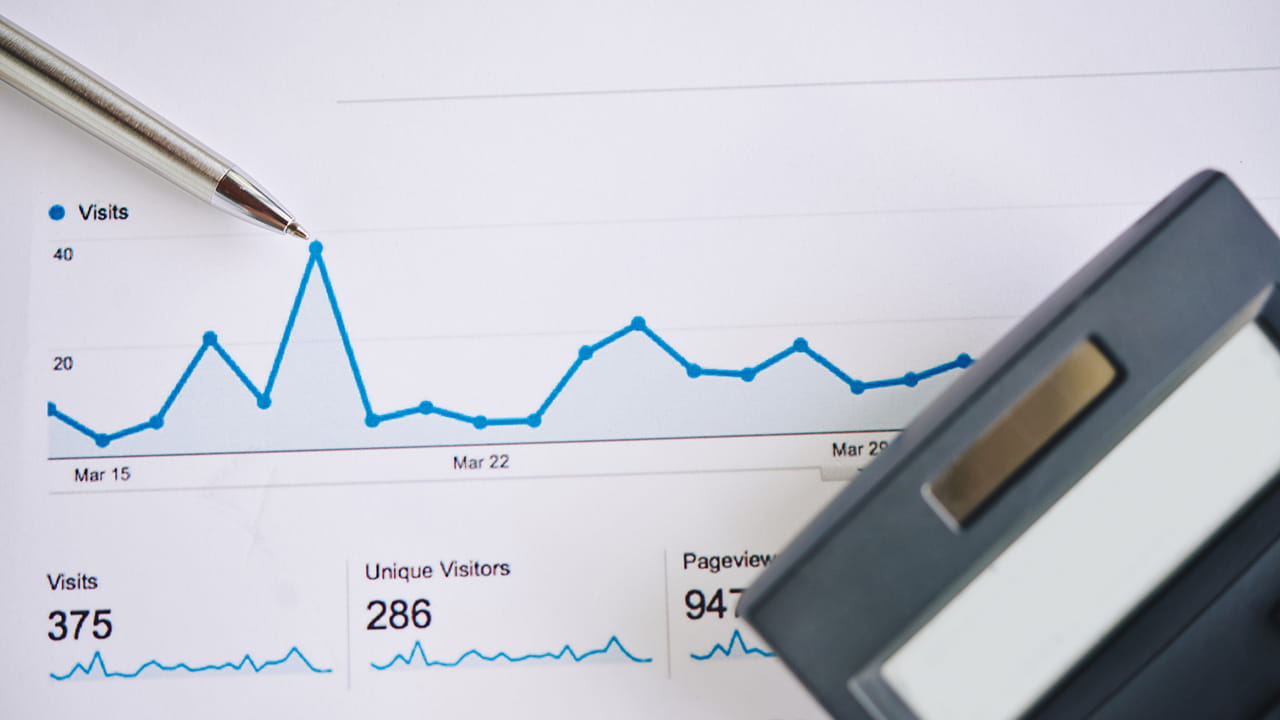
You can diagnose this yourself in three minutes using Google Search Console.
The Tell-Tale Pattern, Impressions Up, Clicks Down
Open Google Search Console. Go to Performance. Set the date range to the last three months versus the same three months a year ago. If your impressions are flat or rising while your clicks are falling, you are looking at the AI Overview signature.
This pattern matters because it rules out the usual suspects. It is not a Google penalty (penalties drop impressions and rankings). It is not a tracking problem. It is not your agency. It is the search engine showing your content to users without sending those users to your site.
Identify Your Hardest-Hit Pages
In the same report, click the Pages tab. Sort by the biggest click drops. Note the top ten worst affected pages. You will almost certainly see a pattern. Informational pages (your “what is”, “how to” and explainer content) at the top of the list. Service pages, location pages and contact pages near the bottom. The drop is not random. It is targeted at the exact content type AI Overviews now replace.
Manually Search Your Top Keywords
Open an incognito browser window. Type in the queries that used to bring you traffic. Look at what now appears at the top of the page. AI Overview? Featured snippet? People Also Ask? Local pack? If your organic listing is now the fifth or sixth thing the user sees rather than the first, your “ranking” is technically intact but your visibility has collapsed. Our team does this audit for clients regularly, and the pattern is consistent across almost every sector.
The Hidden Good News
The traffic you are losing is mostly top-of-funnel, informational traffic. The buyers who would never have converted anyway. The traffic still arriving at your site is significantly more valuable. Visitors from AI search convert at up to 23 times the rate of traditional organic visitors. AI-referred traffic converts at 14.2 percent compared to 2.8 percent for standard Google traffic.
Your sales pipeline is probably in better shape than your traffic chart suggests. The volume is down. The quality has gone up. Once you stop measuring success by raw traffic and start measuring it by qualified enquiries, the picture changes.
The Four-Part Recovery Plan
This is what we are doing with our clients right now. It is practical, sequenced, and built for owner-managed UK SMEs.
1. Stop Optimising for Dying Queries
Audit your top declining pages. If a page exists only to answer “what is X” or “how to do Y”, and that question is now answered by an AI Overview, it is no longer earning you anything. Stop investing in pure informational content unless you can offer genuine first-hand experience, real data, or insight that AI cannot summarise.
2. Refocus on Bottom-of-Funnel Content
Commercial keywords still drive clicks. “Best industrial fabricator in Hertfordshire” is not answered by an AI Overview. Neither is “managed IT support for law firms” or “PPC agency near St Albans“. Comparison pages, service pages, case studies and local pages are AI Overview resistant. They require human judgement and trust, which AI cannot replicate. This is where strong SEO investment is still paying off.
3. Optimise to Be Cited by AI, Not Just Ranked by Google
The new unit of value is brand citation. When ChatGPT or Perplexity name three businesses in their answer, those are the businesses winning. Citation is earned through named expert authors, original data, third-party mentions and structured content AI tools can read. Our guide to making your site AI-friendly walks through the technical foundations.
4. Diversify Beyond Google
Relying on Google as your only traffic source is now structurally risky. Build first-party assets your competitors cannot disrupt: email lists, repeat business, social media communities. Strengthen your local presence and Google Business Profile, because AI tools lean heavily on this for local recommendations.
Use LinkedIn and YouTube as parallel discovery channels, both of which are less affected by Google’s AI changes. Our take on common marketing mistakes covers why over-reliance on one channel hurts SMEs the most.
Why Waiting Is the Most Expensive Option
This decline is structural and permanent, not a temporary algorithm update. Gartner predicts organic search traffic to websites will decrease by 50 percent or more by 2028 as AI search continues to scale. The numbers are not going back up.
Every quarter spent hoping this blows over is a quarter your adapting competitors pull further ahead. The businesses moving now are setting the default in their categories for the next five years. If you have not yet seen how long good SEO actually takes, the same logic applies here. The compounding starts within months and accelerates from there.
What We Are Seeing in Our Own Clients’ Data
The figures above come from industry research. Here is ours, from a live UK account, because we would rather show you something we can actually vouch for.
One of our clients is a law firm in a specialist field. Over a recent month, visitors arriving from AI-referred searches converted at roughly 30%. Across the same site’s traffic as a whole, the figure is 3.9%. That is about eight times. Seventeen enquiries from around fifty-six AI-referred visits. Fifty-six visits is a rounding error on a traffic chart. Seventeen enquiries is a good month.
That is the whole argument in one line. Their traffic number went down. Their business went up.
The caveat, stated plainly because this post is about diagnosing things properly: analytics currently bundles ChatGPT, Perplexity, Gemini, Claude and Copilot into a single channel, so that is AI referrals as a whole rather than one tool. It does not change the shape of the finding.
Why this changes what you should be measuring
If your reporting still leads with sessions, you are now measuring the thing that is falling for reasons outside your control, and missing the thing that is rising. We have moved clients onto qualified enquiries per hundred visits rather than raw traffic, and the conversations on those calls are completely different. Volume down, quality up, revenue flat or better is a good quarter. It does not look like one on a traffic graph.
If you take one thing from this article, make it that. Change the number at the top of your report before you change anything on your website.
We did this to ourselves first
In July we started running TU Marketing’s own website the way we run a client account, with an owner, a monthly report and a number to hit. We saw the same pattern in our own data that we had been seeing in our clients’, and it is why we now treat AI visibility as its own workstream rather than something SEO picks up along the way.
We publish what we find as we find it, including the parts that are still uncertain. Anyone selling you certainty about AI search right now is selling you something else.
If you want to know where you actually stand
We will run an AI visibility snapshot: what the assistants say about your business today, who they name instead of you, and whether your traffic drop is the industry-wide pattern or something specific to your site. You keep the findings either way.
Get your AI visibility snapshot
Frequently Asked Questions
Has my website been penalised by Google?
Almost certainly not. Penalties cause rankings to drop. If your rankings are stable but your traffic is falling, the cause is AI Overviews and zero-click search, not a penalty.
Will my traffic come back if I just wait?
No. This is a structural change in how search works, not a temporary algorithm update. Gartner predicts organic search will decline by 50 percent or more by 2028. Waiting it out is not a strategy.
Should I stop investing in SEO?No. SEO for commercial, transactional and local queries still drives strong clicks. The informational arm needs to evolve into content built to be cited by AI tools.
Why are my impressions up but my clicks down?
Because Google now counts AI Overview appearances as impressions. Your content is being seen on the results page, but the user gets the answer at the top and never clicks through.
Is this happening to every business?
Effectively, yes. 73 percent of B2B websites lost significant organic traffic between 2024 and 2025, and UK businesses saw an 86 percent collapse in traffic growth. The shift is universal.
How quickly can I start appearing in AI Answers?
Technical and entity fixes can show within weeks. Genuine authority takes six months and beyond. Anyone promising you faster is guessing.